Friday, October 5, 2018

NEOM – The Destination for the Future


CCRES proudly promotes world's most ambitious project: an entire new land, purpose-built for a new way of living - NEOM - city of the future


NEOM incorporates the new way of life and the strategic crossroads in trade, innovation, and technology with livability at its core

• NEOM aspires to be the safest, most efficient, most future oriented, and best place to live and work

• NEOM is developed independent of the Kingdom’s existing governmental framework with investors, businesses, and innovators consulted at every stage of development

• NEOM's unique location connects Asia, Europe, and Africa, will include the world’s most significant and promising economic sectors

• NEOM land expands over 26,500 km2; its location will facilitate NEOM's rapid emergence as a global hub that has the potential to bring together the best of Arabia, Asia, Africa, Europe and America

• NEOM will be backed by more than $500 billion over the coming years by the Kingdom of Saudi Arabia, the Saudi Arabian Public Investment Fund, local aswell asinternational investors


His Royal Highness Prince Mohammed bin Salman bin Abdulaziz Al Saud, Crown Prince, Deputy Prime Minister and Chairman of the Public Investment Fund (PIF), announced the launch of NEOM.


NEOM is born from the ambition of Saudi Arabia’s Vision 2030 to see the country develop into a pioneering and thriving model of excellence in various and important areas of life. NEOM aims to thrive the transformation of the Kingdom into a leading global hub through the introduction of value chains of industry and technology.


“NEOM will focus on nine specialized investment sectors and living conditions that will drive the future of human civilization, energy and water, mobility, biotech, food, technological & digital sciences, advanced manufacturing, media, and entertainment with livability as its foundation. The focus on these sectors will stimulate economic growth and diversification by nurturing international innovation and manufacturing, to drive local industry, job creation, and GDP growth in the Kingdom. NEOM will attract private as well as public investments and partnerships. NEOM will be backed by more than $500 billion over the coming years by the Kingdom of Saudi Arabia, the Saudi Arabian Public Investment Fund, local as well as international investors”, said HRH Prince Mohammed bin Salman, Crown Prince and Chairman of the Public Investment Fund (PIF).


NEOM commands a unique location to bring together the best of Arabia, Asia, Africa, Europe and America. NEOM resides in the Northwestern region of Saudi Arabia, and spans over 26,500 km2. Overlooking the waterfront of the Red Sea to the South and the West, and the Gulf of Aqaba, NEOM enjoys an uninterrupted coastline stretching over 468 km, with a dramatic mountain backdrop rising to 2,500 m to the East. A constant breeze leads to mild temperatures. The wind and sun will allow NEOM to be powered solely by regenerative energy.


NEOM is situated on one of the world’s most prominent economic arteries, through which nearly a tenth of the world’s trade flows. Its strategic location will also facilitate the zone’s rapid emergence as a global hub that connects Asia, Europe and Africa, enabling 70% of the world's population to reach it in under eight hours, which brings the potential to combine the best of major global regions in terms of knowledge, technology, research, teaching, learning, living and working.
The site will also become the main entrance to the King Salman Bridge, linking Asia and Africa, which will add to the zone’s economic significance. NEOM’s land mass will extend across the Egyptian and Jordanian borders, rendering NEOM the first private zone to span three countries.


Investments and financing will play a vital role in NEOM, set to be spearheaded by the Kingdom’s economy and supported by PIF – a major global fund with access to a worldwide network of investors and major companies -- set to be brought onboard to drive the success of NEOM.


With the ambition of becoming one of the world’s future economic and scientific capitals, in addition to being the future commerce capital of Saudi Arabia, NEOM is set to attract new foreign direct investment that will contribute to PIF’s long-term growth strategy aimed at strengthening the Saudi Arabian economy.
NEOM is developed to be independent of the Kingdom’s existing governmental framework, excluding sovereignty. NEOM will adopt a regulatory framework that fosters technological as well as societal innovation and entrepreneurship in accordance with international best practices. Investors, businesses, and innovators will be consulted at every step of the development in how best to create the economic framework, design the urban plans, and attract top quality talent that will drive the growth of this zone and its resident population.


“NEOM will be constructed from the ground-up, on greenfield sites, allowing it a unique opportunity to be distinguished from all other places that have been developed and constructed over hundreds of years and we will use this opportunity to build a new way of life with excellent economic prospects. Future technologies form the cornerstone for NEOM’s development: Disruptive solutions for transportation from automated driving to passenger drones, new ways of growing and processing food, healthcare centered around the patient for their holistic well-being, wireless high speed internet as a free good called “digital air”, free world-class continuous online education, full scale e-governance putting city services at your fingertips, building codes that make net-zero carbon houses the standard, a city layout that encourages walking and bicycling and all solely powered by renewable energy just to name a few. All of this will allow for a new way of life to emerge that takes into account the ambitions and outlooks of humankind paired with best future technologies and outstanding economic prospects”, His Royal Highness Prince Mohammed bin Salman added.


NEOM will achieve its ambitious goals of becoming among the top secure areas in the world – if not the most– by adopting the future technologies in the fields of security and safety. This will raise the standards of public life activities and ensure the safety and protection of residents, visitors, and investors.


All services and processes in NEOM will be 100% fully automated, with the goal of becoming the most efficient destination in the world, and in turn be implemented on all activities such as legal, government, and investment procedures among others. Additionally, NEOM will be subject to the highest sustainability standards, and will provide all transactions, procedures, and claims through paperless and electronic means.


A new concept for the workforce will be implemented, based on attracting high-caliber human resources with unique competencies for full-time innovation, decision making and business leadership. Repetitive and arduous tasks will be fully automated and handled by robots, which may exceed the population, likely making the NEOM's GDP per capita the highest in the world. All these elements will put NEOM at the world’s forefront in terms of efficiency which will make it the best destination in the world to live in.


NEOM PROJECT

NEOM is the world’s frst independent special zone stretching over three countries. It is set to become a new vibrant destination located in North- Western Saudi Arabia. Expected to emerge as a leading global hub that exemplifes the future of human civilization by ofering its inhabitants an idyllic lifestyle combined with exceptional economic prospects, NEOM seeks to attract top talent from around the world to push the boundaries of innovation like never before and drive the growth of this zone and its residents.

OPPORTUNIT Y-RICH DEVELOPMENTAL AREA

This special zone is located in North-Western Saudi Arabia and is set to include territory from within the Egyptian and Jordanian borders, to comprise a total area of 26,500 km2. NEOM will provide a plethora of unique development opportunities, as the project’s strategic coastal Red Sea location is notable for its:

PROXIMIT Y TO INTERNATIONAL MARKETS AND TRADE ROUTES:

Approximately 10% of the world’s trade fows through the Red Sea. Connecting Asia, Europe, Africa and America, the zone will enable 70% of the world’s population to reach it in under eight hours.


TEMPERATE CLIMATE AND DIVERSE TERRAIN:

The unique geographical location of NEOM ensures a temperate climate, roughly about 10°C cooler – on average – than its surrounding areas and the rest of the GCC. Cradled in a mountainous region that is home to breathtakingly diverse terrain in North of Saudi Arabia, the area earmarked for the development also enjoys cooler winds coming in from the Red Sea for the best possible climate for future residents. Incredible terrain that ofers:
1. Untouched beaches with more than than 468 km of pristine coastline and several spectacular islands.
2. Scenic mountains reaching up to 2,500m in height, with views across the Gulf of Aqaba and the Red Sea, where during parts of winter some are covered in snow.
3. Idyllic and peaceful desert expanses that astound the visitors.

DEVELOPMENT FROM THE GROUND UP:


The blank slate upon which NEOM is set to be developed provides unique opportunities. The fundamental distinction from traditional urban planning projects is the new technology that will be built into the blueprints of the infrastructural framework.


RICHNESS IN NATURAL RESOURCES:

Situated in an area rich in wind and solar energy resources, the location of NEOM provides an ideal environment in which to develop renewable energy projects. Perennial solar resources (20 MJ/m²). Ideal wind speed (an average of 10.3 m/s). The area is also rich in oil and gas as well as mineral resources. The use of such resources will have to live up to the unmatched high sustainability standards.

ADVANTAGES OF THE PROJECT

NEOM ofers unique opportunities and advantages to leading investors and business owners worldwide, with the aim of stimulating GDP growth in the Kingdom. This project ofers potential investors:
Direct access to the Saudi Arabian market and global markets, given its unique geographic location as a hub that links three continents. Comprehensive supply and innovation systems. Funding and fnancial incentives.
Favorable industry specifc regulatory environment paired with international trade laws.
An infrastructural environment which puts the human frst and technology in its hands to experience the future frst.
Redirecting Saudi spend abroad back indirectly into NEOM. This is an incredible opportunity, as Saudis spend signifcant amounts on tourism ($15 billion), healthcare ($12.5 billion), education ($5 billion) and general investment abroad ($5 billion).


IT ALSO OFFERS INHABITANTS:

An idyllic living environment and rich quality of life.
Technology-based civil services in health, education, transport, entertainment and other fields. Advanced urban planning.
Many opportunities for employment and personal growth. World-standard social norms in culture, arts and education.

HUGE EARNINGS FOR SAUDI ARABIA

The NEOM project is set to transform the Kingdom into a leading global innovation and trade hub through the introduction of value chains of traditional and future industries and technologies to stimulate local industry, private sector job creation and GDP growth in the Kingdom.

CONTRIBUTING TO THE REALIZATION OF VISION 2030

Born from the ambition of Saudi Arabia’s Vision 2030 to see the country develop into a pioneering and thriving model of excellence, the NEOM project targets the achievement of the three following pillars of Vision 2030:

A VIBRANT SOCIETY

A destination at the top of the world’s most livable cities index. Developing the information and digital sectors that contribute to the Kingdom’s GDP.
The promise of becoming an aspirational society that demonstrates the future of human civilization, sought-after as a place to live and work by local, regional and international talent.

A THRIVING ECONOMY

Favorable business environment and regulations.
Incentives for attracting foreign companies and investments. Eleven sectors aimed at diversifying the economy away from oil. Strong contribution to the Kingdom’s GDP and redirecting some of the leakage of overseas back into the base economy.


ECONOMIC SECTORS

A vibrant destination that adopts technology in service of humanity.
The full utilization of digital technologies to increase government efciency. Leveraging the latest advancements in sustainability, connectivity and mobility.
The NEOM project aims to develop eleven key economic sectors for the future, in addition to the establishment of industries that curb economic leakage in the Kingdom and the region in general. This will be achieved through the establishment of development funds, that will support these sectors, identifed as:

THE FUTURE OF ENERGY AND WATER:

Includes being fully powered by renewable energy, forward looking energy storage and transport solutions as well as R&D and manufacturing. In addition, utilizing green technology in building water capabilities and maximizing usage efciency.

THE FUTURE OF MOBILITY:

Includes seaports, airports, autonomous transport solutions such as autonomous vehicles/drones, and others.

THE FUTURE OF BIOTECH:

Includes biotechnology, human biotechnology and pharmaceuticals manufacturing.

THE FUTURE OF FOOD:

Includes an international innovation center for food technologies, including seawater and desert farming, aeroponics and hydroponics.

THE FUTURE OF ADVANCED MANUFACTURING:

Includes new materials in composites and metals, 3D printing, robotics and vehicle manufacturing and much more.

THE FUTURE OF MEDIA:

Includes the development of the television and flm industry, the video gaming industry and digital content.

THE FUTURE OF ENTERTAINMENT:

Includes facilities, activities, sporting and cultural entertainment events and others.

THE FUTURE OF TECHNOLOGICAL AND DIGITAL SCIENCES:

Includes artifcial intelligence, virtual reality and augmented reality technologies, data centers, the Internet of Things and e-commerce.

THE FUTURE OF TOURISM:

The world’s insatiable appettite for a breathtaking experience will soon realise NEOM’s unique culture and exceeds all expectations.

THE FUTURE OF SPORT:

Global sporting visionaries, athletes and fans coming to NEOM will become part of a sporting revolution.

THE FUTURE OF LIVING AS NEOM’S FOUNDATION:

Includes housing, education, security and safety, green spaces, healthcare, hospitality and hotels.


WORLD-CLASS QUALITY OF LIFE

NEOM is positioned to become an aspirational society that denotes the future of human civilization by ofering its inhabitants a lifestyle that surpasses that of any other metropolis, through the development of a unique societal experience that encompasses:

FAVORABLE BUSINESS ENVIRONMENT:

Ofering systems conducive to investment.

IDYLLIC LIVING ENVIRONMENT:

Ofering a comfortable and enjoyable. community with the highest quality of life that includes a combination of beautiful beaches and mountains and untouched land, along with best-in-class education, arts and culture facilities.

CONTINENTAL DEMOGRAPHICS:

Ofering a multicultural environment that nurtures a proactive and diverse community.

WORLD-CLASS EDUCATION:

Ofering high quality education that caters to everyone at all stages of development.

TRANSPORT:

Ofering fast and efcient mobility across NEOM.

COMFORTABLE HOUSING:

Ofering ample housing and facilities for everyone

STABILITY:

Ofering a safe, secure and stable society.

HEALTHCARE:

Ofering world-class healthcare facilities, using advanced capabilities to provide an all-round service.

MAIN FUTURISTIC CONCEPTS

The futuristic vision of the project comprises six main pillars that will be adopted across NEOM:

HUMAN BEINGS AS A TOP PRIORITY:

NEOM provides its residents with comfortable living conditions set within an idyllic society that promotes inclusion and encourages personal growth and lives by world-class social norms.

THE NEXT GENERATION OF HEALTHY LIVING AND TRANSPORT:

NEOM will allow its residents to reach many locations via walking or biking and also have an unprecedented transportation infrastructure, built on future transportation technologies.

AUTOMATED SERVICES/E-GOVERNMENT:

NEOM government services will be fully automated and most easily accessible to its residents .

DIGITIZATION:

NEOM will provide its residents “digital air”, free highest-speed Internet and free online continuous education at their fngertips.

SUSTAINABILITY:

NEOM will be solely powered by renewable energy and buildings will have a net zero carbon footprint.

INNOVATION IN CONSTRUCTION:

Serving as a laboratory for innovative construction techniques and materials operating with complete fexibility to meet future requirements.


ECONOMIC EARNINGS

One of the project’s main advantages is the redirection of the Kingdom’s economic leakage back into the country:

NET IMPORTS TO THE KINGDOM:

The eleven sectors outlined for development will return about $70 billion in revenue back into the Kingdom, by way of commodities currently imported from abroad, through the potential of local production of vehicles, machinery and communication equipment.

INVESTMENTS ABROAD:

The project will provide new opportunities in previously non-existent sectors for Saudi Arabian investors, within an environment that adopts favorable business laws and a system conducive to growth. Thus, part of the investment leakage issue will be addressed.

SAUDI CONSUMERS OVERSEAS SPENDING:

NEOM will ofer a new local tourist destination for Saudi citizens to visit, while ensuring that their capital is injected back into the local economy.
NEOM will be backed by more than $500 billion over the coming years by the Kingdom of Saudi Arabia, the Saudi Arabian Public Investment Fund, as well as local and international investors. NEOM’s contribution to the Kingdom’s GDP is projected to reach at least $100 billion by 2030, in addition to its per capita GDP – projected to become the highest in the world.


For further information on NEOM please visit NEOM.com


Without generous private donations the CROATIAN CENTER of RENEWABLE ENERGY SOURCES would be unable to continue the valuable work it does in bringing objective information to an often overheated debate.

Making a donation is simple: a cheque payable to CROATIAN CENTER of RENEWABLE ENERGY SOURCES can be posted to the following address:

CROATIAN CENTER of RENEWABLE ENERGY SOURCES

Medarska 24,
10 000, Zagreb,
CROATIA


or on


CROATIAN CENTER of RENEWABLE ENERGY SOURCES


BANK ACCOUNT 2484008-1105745975

IBAN HR0324840081105745975

SWIFT RZBHHR2X

Thursday, July 5, 2018

Functional foods by CCRES


Functional foods can be considered to be those whole, fortified, enriched or enhanced foods that provide health benefits beyond the provision of essential nutrients (e.g., vitamins and minerals), when they are consumed at efficacious levels as part of a varied diet on a regular basis. Linking the consumption of functional foods or food ingredients with health claims should be based on sound scientific evidence, with the “gold standard” being replicated, randomized, placebo-controlled, intervention trials in human subjects.

However, not all foods on the market today that are claimed to be functional foods are supported by enough solid data to merit such claims. This review categorizes a variety of functional foods according to the type of evidence supporting their functionality, the strength of that evidence and the recommended intakes. Functional foods represent one of the most intensively investigated and widely promoted areas in the food and nutrition sciences today. However, it must be emphasized that these foods and ingredients are not magic bullets or panaceas for poor health habits. Diet is only one aspect of a comprehensive approach to good health.

“The growing demand for functional foods coupled with the introduction of innovative products and ingredients is driving the market,” said Zeljko Serdar, a CEO at Croatian Center of Renewable Energy Sources. “Other factors that will fuel market growth include an increase in the demand for functional foods from older people, increase in the number of health-conscious adults and increased concern about the health of children.”
The concept of functional foods was born in Japan. In the 1980s, health authorities in Japan recognised that an improved quality of life must accompany increasing life expectancy for the expanding number of elderly people in the population if health care costs were to be controlled. The concept of foods that were developed specifically to promote health or reduce the risk of disease was introduced.

Functional foods have not as yet been defined by legislation in Croatia. Generally, they are considered as those foods which are intended to be consumed as part of the normal diet and that contain biologically active components which offer the potential of enhanced health or reduced risk of disease. Examples of functional foods include foods that contain specific minerals, vitamins, fatty acids or dietary fibre, foods with added biologically active substances such as phytochemicals or other antioxidants and probiotics that have live beneficial cultures.
As interest in this category of foods has grown, new products have appeared and interest has turned to the development of standards and guidelines for the development and promotion of such foods.

Consumer interest in the relationship between diet and health has increased substantially in Croatia. There is much greater recognition today that people can help themselves and their families to reduce the risk of illness and disease and to maintain their state of health and well being through a healthy lifestyle, including the diet. Ongoing support for the important role of foods such as fruits and vegetables and wholegrain cereals in disease prevention and the latest research on dietary antioxidants and combinations of protective substances in plants has helped to provide the impetus for further developments in the functional food market in Croatia.

Trends in population demographics and socio-economic changes also point to the need for foods with added health benefits. An increase in life expectancy, resulting in an increase in the number of elderly and the desire for an improved quality of life, as well as increasing costs of health care, have stimulated governments, researchers, health professionals and the food industry to see how these changes can be managed more effectively. There is already a wide range of foods available to today's consumer but now the impetus is to identify those functional foods that have the potential to improve health and well-being, reduce the risk from, or delay the onset of, major diseases such as cardiovascular disease (CVD), cancer and osteoporosis. Combined with a healthy lifestyle, functional foods can make a positive contribution to health and well being.

Many academic, scientific and regulatory organisations are actively working on ways to establish the scientific basis to support claims for functional components or the foods containing them. Any regulatory framework will need to protect consumers from false and misleading claims and to satisfy the needs of industry for innovation in product development, marketing and promotion. For functional foods to deliver their potential public health benefits, consumers must have a clear understanding of, and a strong confidence level in, the scientific criteria that are used to document health effects and claims.

Japan has led the world in this area. In 1991, the concept of Foods for Specified Health Use (FOSHU) was established. Foods identified as FOSHU must be approved by the Minister of Health and Welfare after the submission of comprehensive science-based evidence to support the claim for the foods when they are consumed as part of an ordinary diet.

In the European Union, there is no harmonised legislation on health claims, which means that they are dealt with at a national level. The challenge in the EU Member States, under the existing regulatory framework, is to communicate messages that avoid any reference to reducing the risk of disease, even if the scientific evidence supports such statements. European labelling legislation prohibits attributing to any foodstuff the property of preventing, treating or curing a human disease or referring to such properties. In the absence of a Directive on health claims, EU Member States have applied different interpretations of the existing labelling legislation. At the same time, there is broad consensus that health claims must be properly substantiated to protect the consumer, to promote fair trade and to encourage academic research and innovation in the food industry.

Over the last decade, starting in Sweden, a number of initiatives have been taken in order to facilitate the use of health claims, including the adoption of guidelines and codes of practice in the various Member States of the EU, including Sweden, The Netherlands and UK, the latter with the Joint Health Claims Initiative (JHCI). In most of these countries, a partnership of industry experts, enforcement authorities, consumer groups and scientists have been involved in drawing up the rules for the scientific justification, communication and presentation of health claims.

In the USA, "reduction of risk of disease" claims have been permitted since 1993 for certain foods. Health claims are authorised by the US Food and Drug Administration (FDA) on the basis of "the totality of publicly available scientific evidence and where there is significant scientific agreement amongst qualified experts that the claims are supported by the evidence". Although manufacturers may use health claims to market their products, the FDA's stated intention is that the purpose of health claims is to benefit consumers by providing information on healthful eating patterns that may help reduce the risk of disease such as heart disease and cancer. The FDA announced that claims can also be based on "authoritative statements" of a Federal Scientific Body, such as the National Institutes of Health and Centres for Disease Control and Prevention, as well as from the National Academy of Sciences.

Because of increasing interest in the concept of "Functional Foods" and "Health Claims", the European Union set up a European Commission Concerted Action on Functional Food Science in Europe (FUFOSE). The programme was coordinated by the International Life Sciences Institute (ILSI) Europe and the aim was to develop and establish a science-based approach to the evidence needed to support the development of food products that can have a beneficial effect on an identified physiological function in the body, that can improve an individual's state of health and well-being and/or reduce the risk of disease. The FUFOSE project looked at six areas of science and health: growth, development and differentiation, substrate metabolism, defence against reactive oxidative species, functional foods and the cardiovascular system, gastrointestinal physiology and function, and the effects of foods or behaviour and psychological performance. The final document was published in the British Journal of Nutrition.

The report takes the position that functional foods should be in the form of normal foods and they must demonstrate their effects in amounts that can normally be expected to be consumed in the diet. A functional food can be a natural whole food, a food to which a component has been added, or a food from which a component has been removed by technological or biotechnological means. It can also be a food in which the nature of one or more components has been modified, or a food in which the bioavailability of one or more components has been modified, or any combination of these possibilities. A functional food may be targeted at the whole population or for particular groups, which may be defined, for example, by age or by genetic constitution.

The EU Concerted Action supports the development of two types of health claims relevant to functional foods, which must always be valid in the context of the whole diet and must relate to the amounts of foods normally consumed.

These are:

1. TYPE A: "Enhanced function"claims that refer to specific physiological, psychological functions and biological activities beyond their established role in growth, development and other normal functions of the body.

This type of claim makes no reference to a disease or a pathological state, e.g. certain non-digestible oligosaccharides improve the growth of a specific bacterial flora in the gut; caffeine can improve cognitive performance.

2. TYPE B "Reduction of disease-risk"claims that relate to the consumption of a food or food component that might help reduce the risk of a specific disease or condition because of specific nutrients or non-nutrients contained within it (e.g. folate can reduce a woman's risk of having a child with neural tube defects, and sufficient calcium intake may help to reduce the risk of osteoporosis in later life).

The FUFOSE conclusions and principles need to be implemented. Therefore, a new EU Commission Concerted Action programme, the Process for the Assessment of Scientific Support for Claims on Foods (PASSCLAIM) project is aiming to resolve some of the ongoing issues of validation, scientific substantiation of claims and communication to the consumer.

The project started with and will build upon the principle that "enhanced function" and "reduced risk of disease" claims should be based on well designed studies using appropriately identified, characterised and validated biomarkers. PASSCLAIM aims to establish common criteria to assess the scientific substantiation of health-claims, providing the framework to prepare scientific dossiers supporting claims. The PASSCLAIM Consensus Document will assist those making claims, those who regulate claims and it will also improve the credibility of claims for consumers. This integrated strategy will generate more consumer confidence in the science base related to claims on foods and will better address the concerns of consumers.

Although there is no European legislation regarding safety of functional foods as such, the food safety aspects are already covered by existing EU regulations. However, foods with health claims must consider the overall dietary significance, including the amount and frequency of consumption, any potential interactions with other dietary constituents, any impact on metabolic pathways and potential for adverse effects, including allergy and intolerance factors.


The Croatian market for functional food is still growing. Functional foods offer great potential to improve health and/or help prevent certain diseases when taken as part of a balanced diet and healthy lifestyle. The subject of health claims is becoming increasingly important and there is broad consensus that there needs to be a regulatory framework in Croatia that will protect consumers, promote fair trade and encourage product innovation in the food industry. The research opportunities in nutrition to explore the relationship between a food or a food component and an improved state of health and well-being, or reduction of disease, present the greatest challenge to scientists now and in the future. The communication of health benefits to consumers is also of critical importance so that they have the knowledge to make informed choices about the foods they eat and enjoy. Any health benefits attributed to functional foods should be based on sound and accurate scientific criteria, including rigorous studies of safety and efficacy. Interactions with other dietary components and potential adverse interactions with pharmaceutical agents must be clearly imparted. Consumers must realize that functional foods are not a “magic bullet” or a panacea for poor health habits. There are not good and bad “foods,” only good and bad dietary patterns. Diet is only one aspect of a comprehensive lifestyle approach to good health, which should include regular exercise, tobacco avoidance, stress reduction, maintenance of healthy body weight and other positive health practices. Only when all of these issues are addressed can functional foods become part of an effective strategy to maximize health and reduce disease risk.


Without generous private donations the CROATIAN CENTER of RENEWABLE ENERGY SOURCES would be unable to continue the valuable work it does in bringing objective information to an often overheated debate.


Making a donation is simple: a cheque payable to CROATIAN CENTER of RENEWABLE ENERGY SOURCES can be posted to the following address:


CROATIAN CENTER of RENEWABLE ENERGY SOURCES

Medarska 24,

10 000 ,Zagreb,

CROATIA


or on


CROATIAN CENTER of RENEWABLE ENERGY SOURCES


BANK ACCOUNT 2484008-1105745975

IBAN HR0324840081105745975

SWIFT RZBHHR2X

Saturday, June 30, 2018

Renewable energy target of 32%


European countries gave their endorsement to a binding EU-wide renewable energy target of 32% for 2030. They confirmed a deal on the Renewable Energy Directive, which negotiators from the Council and European Parliament reached on 14 June.
EU ambassadors endorsed the provisional agreement reached by the Bulgarian Presidency on the revision of the renewable energy directive. Negotiators of the Bulgarian Presidency reached a deal with the European Parliament at the fifth trilogue meeting, in the early morning of 14 June. Today's endorsement means that the Council has approved the deal.
This new regulatory framework will pave the way for Europe's transition towards clean energy sources such as wind, solar, hydro, tidal, geothermal, and biomass energy. It will also allow Europe to maintain its leadership role in the fight against climate change and in meeting the goals set by the Paris Agreement.
The agreement sets a headline target of 32% energy from renewable sources at EU level for 2030. There is a clause to review this target in the event of changes in demand of energy consumption and to take account of the EU's international obligations.
Other key elements of the agreement:
  • The design of support schemes will provide for a possibility of technology specific support, aligned with state aid guidelines. The opening of renewable support towards neighbouring member states will be voluntary, at an aspirational pace of at least 5% between 2023 and 2026 and 10% between 2027 and 2030. Except for certain cases, member states will be obliged to issue guarantees of origin.
  • Permit granting procedures will be simplified and streamlined with a maximum of two years for regular projects and one year in case of repowering, both extendable for an additional year in case of specific circumstances and notwithstanding environmental and judicial procedures. For small-scale projects below 10.8kW simple notification procedures will apply. Each member state may choose to apply simple notification procedures also to projects up to 50kW.
  • The annual increase of energy from renewable sources in heating and cooling will be 1.3 percentage points indicatively, or 1.1 percentage points if waste heat is not taken into account.
  • Via obligations on fuel suppliers, renewables will reach a level of at least 14% in transport by 2030, supplemented by a set of facilitative multipliers to boost renewables in different sectors.
  • Conventional biofuels will be capped EU-wide at a maximum of 7%, with additional member state caps if below 7%. The counting of biofuels with a high risk of indirect land use change (ILUC) will be freezed at 2019 levels and gradually phased out from 2023 towards 2030.
  • For biomass based electricity production, efficiency criteria will be applied according to the size of installations.
  • The directive also establishes a clear and stable framework for household self-consumption. This means that consumers with small-scale installations of up to 30kW will be exempt from any charges or fees, while allowing member states to apply charges if self-consumption grows excessively.
Background and next steps
The revised renewable energy directive is one of the eight legislative proposals of the clean energy package which the Commission presented in November 2016. The EU has undertaken to cut CO2 emissions by at least 40% by 2030. By boosting renewable energy, which can be produced from a wide variety of sources including wind, solar, hydro, tidal, geothermal, and biomass, the EU is lowering its dependence on imported fossil fuels and making its energy production more sustainable. The renewable energy industry also drives technological innovation and employment across Europe.
The Council adopted its position on the proposal on 18 December 2017. This enabled the Bulgarian Presidency to start trilogue negotiations with the European Parliament on 27 February 2018. Following intense negotiations, a provisional deal was reached between the co-legislators at the fifth trilogue meeting on 13 - 14 June.
Today's endorsement by EU ambassadors means that the directive can be submitted for approval to the European Parliament, where the plenary vote is expected in October, and then back to the Council for final adoption. The directive will enter into force 20 days following its publication in the Official Journal of the EU.

This is a good step forward. It’s significantly higher than the European Commission’s proposal of 27% back in 2016. It’s also very good that the agreement sets out concrete measures to help ensure countries deliver on the target. The five year visibility on the support for renewables will really help industry plan ahead and reduce costs. It’ll help send the right signals to support investments in the supply chain.
But the Clean Energy Package is not over yet. The Parliament and Member States still need to agree on re-designing Europe’s electricity market to accommodate more renewables. But the fact that we have a deal on one of the most politically-sensitive files is very encouraging. It means that wind will play an increasing role in Europe’s energy mix. It means that we will stay in the race for global competitiveness. It’s good for jobs and investment in wind energy.

Dogovor je postignut 13. lipnja, a uključuje:
  • 32% kao obvezujući cilj EU-a za obnovljive izvore do 2030. godine
  • čišći transport temeljen na održivijim biogorivima
  • nove mjere za potporu proizvodnji i potrošnji vlastite energije
Ciljevi koji se tiču transporta i veće upotrebe druge generacije biogoriva nalažu da bi goriva za transportne svrhe morala do 2030. godine doći iz obnovljivih izvora u najmanjem udjelu od 14%. Biogoriva prve generacije, temeljena na usjevima, moraju biti ograničena na razinu iz 2020. godine (s dodatnim 1%) i ni u kojem slučaju ne smiju prelaziti 7% ukupne potrošnje cestovnog i željezničkog prijevoza, dok udio naprednih biogoriva i bioplina mora biti najmanje 1% do 2025. godine i najmanje 3,5% do 2030. godine.
Prema ovom privremenom sporazumu države članice moraju osigurati da potrošač u EU ima pravo postati proizvođač i potrošač vlastite energije iz obnovljivih izvora, koji može:
  • generirati obnovljivu energiju za vlastitu potrošnju, pohraniti i prodati višak proizvodnje;
  • ugraditi i upravljati sustavima za skladištenje električne energije u kombinaciji s postrojenjima koja proizvode obnovljivu električnu energiju za vlastitu potrošnju, bez odgovornosti za bilo kakvu dvostruku naplatu;
  • ne smije biti podvrgnut nikakvoj naknadi ili naknadi za vlastitu energiju do 2026. godine, s određenim ograničenim izuzećima koja su predviđena nakon toga;
  • primati naknadu za vlastitu proizvodnju električne energije iz obnovljivih izvora koja ulazi u mrežu;
  • pridružiti se zajednicama obnovljivih izvora energije kako bi integrirao vlastitu potrošnju u prijelaz na čišću energiju.
Privremeni sporazum sada treba odobrenje ministara koji sjede u Vijeću EU-a i zastupnika u Europskom parlamentu. Kada se to postigne, zakon stupa na snagu 20 dana nakon datuma objavljivanja u Službenom listu Europske unije. Zemlje članice morat će uključiti nove elemente Direktive u nacionalna zakonodavstva do 30. lipnja 2021.

Sunday, June 10, 2018

Europe 2020 indicators - Croatia

The energy sector in Croatia

Croatia has around 4.28 million inhabitants and rich potential for renewable energy and energy efficiency. In 2016 the country produced 57.3 percent of its total primary energy supply, including around 20 percent of the oil it consumes, and around two thirds of natural gas. Unlike most of its Western Balkan neighbours it no longer has its own coal reserves.
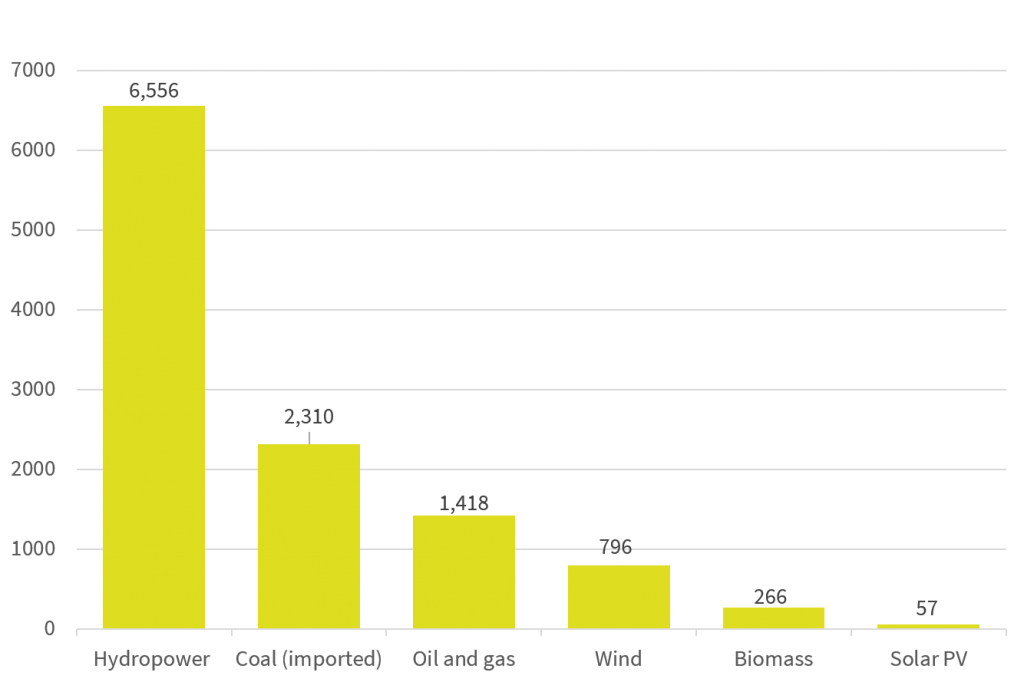
Croatia produces only about half of its own electricity, depending on hydrological conditions. Most of the electricity generation capacity is owned by Hrvatska Elektroprivreda, the state-owned electricity group. In 2015, 57% of domestically generated electricity came from hydropower, 20% from coal, 12.4% from oil/gas, 7% from wind, 2.3% from biomass and 0.5% from solar. In other words, non-hydropower renewables accounted for just under 10% of generation. Krsko nuclear power plant in Slovenia, of which HEP owns 50 percent, also contributes to Croatia’s electricity supply but is counted under imports in the statistics.
Electricity generation in Croatia, 2015, GWh
Although Croatia has made some progress in using its wind and solar PV potential in recent years, this there is still much more potential that has not been exploited. Solar thermal is also underused compared to the obvious potential in this very sunny country.
SourceSolar PVWind
IRENA
Cost-competitive potential
3173 MW
4309 GWh
14384 MW
28317 GWh
SEERMAP
Decarbonisation scenario (2050 minus 2016)
1839 MW
1837 GWh
3857 MW
7215 GWh
SEE-SEP
The EU Road scenario
6950 MW
11830 GWh
3200 MW
8450 GWh
Renewables and energy efficiency development has been held back by a lack of political will resulting in small quotas for support for wind and especially solar. Croatia has not developed a new energy strategy since the over-ambitious and outdated 2009 one, so there has been no systematic debate about the country’s energy direction in recent years. In line with EU state aid rules, Croatia has now switched to auctioning and feed-in premiums rather than feed-in tariffs, but as of May 2018 had not approved the supporting legislation that would enable the system to function, this braking further development until this is resolved.
Much time and resources have also been lost on pushing outdated projects such as the 500 MW Plomin C coal power plant, to be run on imported coal, the 450 MW Peruća gas power plant, and large-scale hydropower projects in sensitive locations such as Ombla and Kosinj. The first three of these projects have now been cancelled after civil society campaigns highlighted their weaknesses. However a floating LNG terminal on the island of Krk is still planned, with support from the EU.
Croatia still has plenty of potential for energy efficiency improvements. Its energy intensity of total primary energy supply was 21.9 percent above the EU average in 2016. There is still plenty of work to be done to improve efficiency in the residential sector.

Sources:
  1. Energy Community Implementation Report 2017 
  2. BIH State Regulatory Commission for Electrical Energy – 2016 annual report 
  3. IEA energy statistics
  4. EIHP: Energy in Croatia 2016 

BONUS

The winners of the EU Sustainable Energy Awards 2018 were announced at an Awards Ceremony with the European Commissioner for Climate Action and Energy, Miguel Arias Cañete, in Brussels.


12 projects across 4 categories made it onto the Awards shortlist this year.

CONSUMERS: Bio.Energy.Parc

In 2008, the 7,200 inhabitants of Saerbeck decided to become self-sufficient in renewable energy by 2030 implementing over 150 actions based on an approach to link people and profits and transforming an old army munitions site into a sustainable energy park.
“We are proud to have received this award. It’s a big ‘yes’ to continue our way. We have been working on this project for the past 10 years and we are not at the end yet. This prize gives us the motivation to continue,” on behalf of Bio.Energy.Parc.Saerbeck Guido Wallraven said.

PUBLIC SECTOR: PEACE Alps

Project supports Alpine authorities in making the transition to a low-carbon area. Involving more than 200 municipalities across 6 countries, PEACE_Alps focuses on energy management, building renovation and public lighting. It also helps authorities overcome barriers in implementing their strategic action plans.
“Have a good project that is a good idea, with a good team behind it. We have been lucky at PEACE_Alps with such a team. It’s about the spirit of the people and believing in the change and transition,” Silvio De Nigris accepting the award on behalf of PEACE_Alps said.

BUSINESSES: WiseGRID

Funded by the EU’s Horizon 2020 programme, WiseGRID has developed a set of 9 solutions to improve the electricity grid and empower customers, by making the grid smarter, open and more consumer orientated.
“It’s very exciting. We are very happy about both our awards – from the jury and especially the citizens’ Award – this means that it’s not just the technology which is ready to help the energy transition but society is also willing to embrace the energy transition,” said Antonio Marques accepting the award for WiseGRID.

YOUNG ENERGY LEADERS: Czech Sustainable Houses

What began as an online hub providing information on sustainability, developed into an annual architectural competition inspiring young architects to lead the way in energy transition with their innovative, energy-saving designs.
“This award is for all the people that worked on Czech Sustainable Houses project. We started this project four years ago and we’ve created the largest student architecture competition. We also created a new system for energy management and households. We’re just a little grassroots organisation, but we’re dynamic,” explained Pavel Podruh, Czech Sustainable Houses project on hearing that his project won.

Croatian Center of Renewable Energy Sources (CCRES)