Showing posts with label Agroforestry. Show all posts

Wednesday, February 12, 2025

Agroforestry Uncovered / Sustainable Farm


Wind protection is a long-standing indigenous practice in traditional agriculture of many regions.

In attempts to improve or establish wind protection schemes with trees, it makes sense to study the link that can be observed between traditional and relatively recent but promising agroforestry practices. And it makes sense as well to try to quantify phenomena taking place in such traditional and promising practices alike.

In the case study in Croatia reported here, the farmer requested CCRES to assist in providing the agrometeorological input into the set-up of experiments under conditions in farmers' fields, with a system of wind barriers with trees (plums, walnuts, pine, and maple), in irrigated crops in Lika Region.
By simply inspiring ourselves from their intelligence we can start to imitate the the way forests function. We can understand what the dynamics and principles of nature and apply them to our agricultural systems. This is a challenge for the farming industry, as it means a deep change on a philosophical level and technical level. 

Zeljko Serdar, CROATIAN CENTER of RENEWABLE ENERGY SOURCES ( CCRES )

Friday, April 14, 2023

Start following your dreams NOW


If you catch yourself daydreaming during the workday, you’re not alone. We all think about following our dreams sometimes. But how do you know if you should actually go for it? 

Now, that’s not a question for everyone because not everyone has a dream. You’ll regret it later. When you’re older, you may ruminate on what could have been. By then, changing courses will be more complicated. You’ll be struggling to make up for the lost time. It isn’t impossible, though, and it’s never too late to follow your dreams. That’s not intended to be a slight or a negative statement, but it is a reality that I learned the hard way. 

What does it feel like to see a dream come true?


It’s no secret that one of my dreams is seeing a country transformed by permaculture. Over the last few years, the vision of transformation has motivated everything I do.


When we first started casting the vision of transformation, I didn’t think it was something I’d see in my lifetime. I believed it so much I told people that on the front end so they would understand that I had big dreams, but I wasn’t completely crazy. You can inspire others. Eventually, young people and even your friends will ask how you made it to where you are. You can encourage them to pursue their own dreams, too.

Over time, as more and more people have joined me in my dream, I’ve come to realize that not only is transformation possible, but I believe I’ll see it before I die. I’ve gone from having a dream to have a belief, and that belief grows stronger every day. There’s no shortage of inspiration out there. Here are some of my favorite quotes about following your dreams.


“The biggest adventure you can ever take is to live the life of your dreams.” - Oprah Winfrey

“Don’t dream your life, but live your dream.” - Mark Twain

“If you can dream it, you can make it so.” - Belva Davis

“A winner is a dreamer who never gives up.” - Nelson Mandela

“The future belongs to those who believe in the beauty of their dreams.” - Eleanor Roosevelt

“Each dream you leave behind is a part of your future that will no longer exist.” - Steve Jobs


Every person who sees a dream come true must first own that dream. They must see it clearly, and chase after it passionately with every strategy, skill, and talent they possess. Dreamers must call others to their dream and pay the price to move forward together with tenacity. 


But most of all, a dreamer must see and desire all the ways their dream will benefit others more than it benefits themselves. You need a lot of courage to build a happy life. We often focus on the reasons not to do something, so we must train ourselves to focus on the positive. Everyone in your life will have an opinion about your dreams. Some will offer valuable advice while others will try to stop you. Only one person’s opinion matters - yours. Keep this in mind as you start following your dreams.


If you need help finding the courage to follow your dreams, reach out for support. Having an objective outsider can help you set clear goals and stay accountable to yourself. Once you have a plan, there’s no telling what you can accomplish.

I’ve seen a lot of dreams come true in my life, but what I’m experiencing now is something different, something deeper, and it’s something I want so many others to experience too. I want everyone to know what it feels like to see a God-sized dream come true because it is amazing in a way I can’t even describe.

To quote my friend, Josip Babich, "I want more for you than I want from you. And I want bigger things for you now more than ever."

Let’s make it happen.

Wednesday, March 16, 2022

Shade Grown Livestock in Agroforestry


The welfare benefits of shade in cattle operations have been documented, yet there are some inconsistencies between studies, particularly in behavior patterns in shaded and unshaded groups. Studies have shown reduced physiological responses to heat stress, performance benefits, and increased use of shade in cattle provided the opportunity to utilize shade in the weather outside of their thermoneutral zone. Common reasons for not providing shade on operations are often related to the cost of the investment paired with the assumed unclear benefits and the questionable need for shade in certain regions. 


Fraser’s framework for animal welfare was discussed, identifying the need for a holistic approach to welfare assessment when evaluating the impacts of shade on overall cattle well-being. Current research focuses on performance indicators in part due to the fact that if the economic value can be found with shade implementation, then the return on investment becomes extremely clear. It is important for stakeholders to expand their vision of animal welfare to include things such as cattle preference, mental state, and opportunity for choice in their environment when evaluating the value of shade to cattle welfare. Future research should focus on quantifying current shade provision across the supply chain, understanding producer perspectives of cattle shade need, including indicators of the affective state into studies, and assessing the economics of shade implementation.

Benefits of Shade Grown Livestock

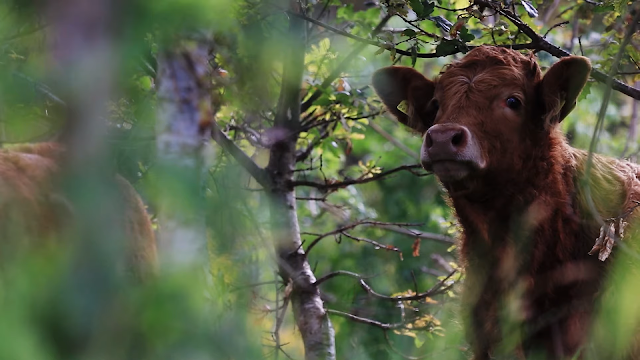
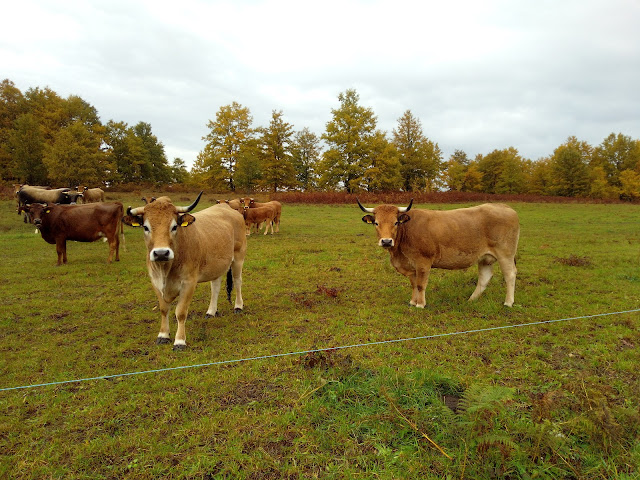
One visible effect of including trees in pastures is the shady haven which they provide for livestock o­n hot summer days. The benefits of providing protection from the hot rays of the summer sun are obvious. After all, that is why we wear a hat! It easily follows that animals, which are unable to shelter from the direct sun during the heat of the day, will have to expend energy to deal with their discomfort and/or reduce their feeding activity. Their productivity should decline in proportion to the time spent under these unfavorable conditions. Increased livestock production during hot weather is often promoted by agroforestry as o­ne of the benefits of having trees. However, there is very little published research available to either verify or disprove this widely held belief.


Cattle may orient their pasture use to be near sources of shade. But how much does livestock performance really improve when summer shade is provided? This is a harder question to answer than you might think. Millions of cattle are successfully raised in the hot humid summers of the Midwestern and Southeastern states without shade. So, would shade increase their performance? Shade has generally been useful in increasing milk yields of dairy cattle and live weight gains of feedlot cattle in hot climates. This is especially true for European breeds of cattle in areas that are both hot and humid (Blackshaw and Blackshaw 1994). However, high concentrations of high-producing animals consuming relatively high-energy rations are somewhat different than the conditions typical of forage-based cattle production in pastures and rangelands.


Surprisingly few reliable studies of cattle productivity with and without shade have been done under realistic pasture conditions. I could o­nly find two controlled comparisons of cattle grazing in pastures with vs. without shade in the regularly published literature. The greatest effect of shade trees o­n summer weight change in free-ranging cattle was reported for European breeds of cattle in Louisiana (McDaniel and Roark 1956). Averaged over 4 years, cows grazing under scattered pines spent about half an hour more time grazing each day and gained 1.29 lb./head/day compared to cows grazing open pastures, who lost weight during the summer. Unfortunately, no pasture data are provided.


It is not possible, therefore, to completely separate shade effects upon forage quantity and quality from its effect o­n animal thermoregulation. Much more modest increases in summer weight gains were reported for cattle with access to artificial shade structures in Oklahoma (McIlvan and Shoop 1970). During 4 years, weight gains of Hereford cattle were increased 6, 9, 1, and 11% by artificial shades, with the greatest impact of shade seen during hot and humid weather.


Blackshaw and Blackshaw (1994) summarized the literature relating shade to heat stress in cattle. As they explain the situation, cattle receive heat directly from the sun when standing in the open. Dull, dark-colored hair absorbs most sunlight, which is converted to heat. White, shiny coats reflect much of the energy, and less is converted to heat. Shade can be very helpful in reducing heat loading from the sun's rays, especially for dark-colored animals. However, quite a bit of heat can be received after being reflected from bare soil or nearby objects. Shade is not very effective in protecting cattle from reflected radiation. For example, a California study found that 33% of the heat load received by a shaded animal was reflected from the ground and 28% came from the overhead shade material. Total heat load was o­nly reduced by 30% under shade compared to out in the sun.


Metabolic heat generated from the digestion and use of energy contained in food can also be a significant source of heat. Approximately 35-70% of the energy which cattle extract from food is converted to heat. Active animals and those consuming large amounts offered can generate significant amounts of internal heat. Shade has no direct effect on this heat source. So, although shade may reduce the heat loading of cattle, it probably o­nly directly affects less than a quarter of the total heat energy cattle must deal with o­n a sunny day. This reduction may be important under severe heat conditions or when livestock is under stress because of other factors. It is less likely to be crucial for acclimated cattle that are otherwise well-fed, well-watered, and healthy.


Cattle lose heat primarily by transferring it to cooler air, and by evaporation of water from sweat and from moist tissues in the respiratory system. The cooler air temperatures under trees are very helpful in increasing heat transfer from animals. This is probably as important in the general cooling effect of shade as is protection from direct sunlight. It is less effective, however, for naturally well-insulated animals, such as some of the northern European breeds of cattle, which have thick coats of hair. Shade trees do not reduce air temperatures under windy conditions and still air under trees may be more humid as well as cooler than that out in the open pasture. Because of the major role that the evaporation of water plays in heat transfer, heat stress is much greater under humid conditions than under dry heat.


The issue of heat stress is further complicated by both physiological and behavioral adaptations which cattle make to reduce the effects of heat. Heat stress may reduce animal performance in two ways. First, it may depress grazing and food intake. And second, animals may resort to panting or other actions that consume energy. Cattle breeds differ markedly in their ability to tolerate heat. In general, Brahman-type cattle are more heat tolerant than are northern European breeds. However, much heat tolerance is behavioral. Cattle may successfully deal with lack of shade by restricting their grazing and traveling to the cooler hours of the day or night and by standing together in areas of good airflow.


So, where does all this leave agroforestry? There are many sound esthetic, ecological, and economic reasons for including trees in pastures. It makes intuitive sense to most of us that shade should increase comfort and improve animal performance. However, the factual basis for improved livestock production due to shade is very limited. We need to be careful about advocating shade as a means of reducing heat stress. Protection from sunlight o­nly reduces o­ne of several sources of heat which contribute to thermal stress in animals. Livestock has both physiological and behavioral mechanisms they can use to counter environmental stresses. Livestock performance is unlikely to be greatly improved by shade unless heat stress is sufficiently great and of adequate duration to overcome these coping mechanisms. Such conditions are probably less common under traditional range and pasture production systems than we think.

Literature Cited
Blackshaw, J.K., and A W. Blackshaw. 1994. Heat stress in cattle and effect of shade o­n production and behavior: a review. Aust. J. Exp. Agr. 34:285-295.

Cook, J.G., L.L. Irwin, L.D. Bryant, R.A. Riggs, and J.W. Thomas. 1998. Relations of forest cover and condition of elk: a test of the thermal cover hypothesis in summer and winter. Wild. Mono. 141:1-61.

McDaniel, A.H., and C.B. Roark. 1956. Performance and grazing habits of Hereford and Aberdeen-angus cows and calves o­n improved pastures as related to type of shade. J. Anim. Sci. 15:59-63.

McIlvain, E.H., and M.C. Shoop. 1970. Shade for improving cattle gains and rangeland use. J. Range Manage. 24:181-184. 

Ockenfels, R.A., and D.E. Brooks. 1994. Summer diurnal bed sites of coues white-tailed deer. J. Wildlife Manage. 58:70-75.


Saturday, July 10, 2021

Agroforestry, forest farming, and food forest


The terms agroforestry, forest farming, and food forest get used often in conjunction. Although they sound synonymous, in fact, they are related terms that have distinctly different definitions and practices. In today’s post, we explore these terms.


Agroforestry is the intentional integration of trees and shrubs into crop and animal farming systems to create environmental, economic, and social benefits.” So simply put, agroforestry is using trees and shrubs for some kind of benefit on the farm.


We at CCRES divide agroforestry into five major subsections. These are alley cropping, silvopasture, forest farming, riparian forest buffers, and windbreaks. So forest farming is a distinct subsection of agroforestry. To paraphrase that saying about squares and rectangles, all forest farming is agroforestry, but not all agroforestry is forest farming.


Let’s explore these five subsections.


Alley cropping is a system where trees are planted in rows for some purpose (like fruit, timber, nuts). While the farmer is waiting for those trees to mature, he plants some kind of annual between the rows of trees for short-term (annual) income.


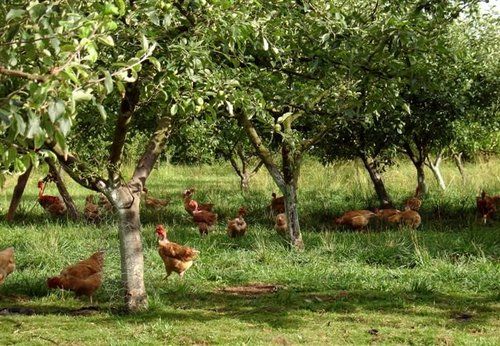
Silvopasture is utilizing trees and livestock on a single piece of land. In general, the trees provide wind, shade, and rain shelter to the livestock. The trees themselves may be grown for timber, fruits, or nuts. The fruits and nuts may be for human or livestock consumption.


Forest farming is what everyone thinks of when the term agroforestry is used. Forest farming uses existing forests to grow food, medicinal or herbal crops with some slight manipulation of the existing forest. A classic example is using the shade of the forest to grow ginseng. Another classic example is growing shiitake mushrooms on logs from the forest under the shade of the forest.

Riparian forest buffers utilize plantings of trees, shrubs, and grasses right next to creeks, streams, and rivers. The two main purposes of riparian forest buffers are to stabilize the banks from erosion and to filter farm nutrient runoff from going into waterways.


Windbreaks are just rows of trees used to slow downwind. That being said, windbreaks have many uses. They can be used to shelter animals or buildings from wind, dust, or odors. They can be used to shelter crops from neighbors’ pesticide drift. In the Lika region, they often function as living snow fences in the winter, where snow piles naturally accumulate.


A food forest is an intentionally planned and grown “forest site.” It uses different heights of trees and shrubs to produce food at different canopy levels to maximize production. Planting is in a non-linear fashion. Food forests also utilize both the near above-ground level, ground level, and below ground level to maximize production. An example in descending height order would be chestnuts and pecans, followed by persimmons, followed by pawpaws, followed by dwarf apples, followed by comfrey (for mulching), followed by berries. Permaculturists from CCRES have been responsible for the increased popularity of food forests in Croatia over the last decade.

Tuesday, October 22, 2019

Agroforestry


Agroforestry, as a practice of integrating woody vegetation with crop and animal
 systems, benefits agriculture, forestry and related stakeholders with a 
sustainable land management, with multiple ecological and economic 
interactions. As such, agroforestry systems can be integrated with a set 
of practices to produce biological resources and sustainable methods of
 food, wood, and fiber production and provide a wide range of ecosystem
 services, such as carbon sequestration, water regulation and habitat
 provision for biodiversity and landscape amelioration. While, at local scale,
 it can benefit farmers, landowners and nature conservation efforts, at 
larger scale, it can help the European Union to accelerate the deployment 
of a sustainable European bioeconomy towards the 2030 Agenda and
 its Sustainable Development Goals (SDGs), as well as objectives for 
the Paris Agreement. However, this requires research proposals and 
results tested with silvoarable and silvopastoral agroforestry systems
 designed mixed with agricultural and forestry practices to demonstrate
 their management, production and profitability. Such knowledge should
 then benefit and reach end-users to facilitate the correct implementation
 of optimal and beneficial practices within a European bioeconomy 
development context.

Agroforestry, ecosystem services, landscape and 

rural development


  • Climate change (adaptation and mitigation)
Agroforestry is a diversified set of agricultural production systems that
 integrate trees in the agricultural landscape, which is often regarded as 
a strategy for both adaptation and mitigation to climate change. The
 inclusion of trees in agroforestry systems has a strong significance
 for carbon sequestration and therefore is an important and often 
underestimated contribution to climate change mitigation. Agroforestry
 can also support production in rural areas with improved resilience
 to climate variability as well as climate change, through intensification,
 diversification and buffering of farming systems. This session foresees 
positive outcomes of agroforestry from case studies or dynamic modelling
 on mitigation and adaptation to climate change.

  • Enhancing ecosystem services provision by agroforestry systems
Agroforestry systems provide a broad number of regulating and
 supporting ecosystem services, ranging from biogeochemical cycling,
 through maintenance of soil fertility and carbon storage, to watershed
 protection and biodiversity. However, as emphasized by several researchers
, current understanding of agroforestry systems functioning and the best 
strategies to enhance the provision of multiple ecosystem services
 require deeper understanding. This session will examine the relationships 
between different ecosystem services as well as the management strategies 
to favor their provision in different agroforestry systems. Cases of Payment 
for Environmental Services (PES) would be encouraged.

  • Agroforestry, biodiversity, and wildlife management
Among several ecosystem services, agroforestry increases biomass, habitat 
and landscape connectivity, with potential to maintain higher levels of 
biodiversity in comparison to crop or pasture systems. Thus, spreading 
of different agroforestry ecosystems may be a viable complementary land
 use strategy for biodiversity conservation through small and diversified
 farms. The session defines the relevance of agroforestry systems for
 biodiversity conservation and enhancement, with general discussions
 and specific outcomes from case studies on positive relationships 
between plant/tree diversity and biodiversity — driven by either niche 
complementarity or the greater likelihood of including functionally-important
 species in more diverse assemblages.

  • Agroforestry and the landscape
This session focuses on options for a sustainable landscape development 
and management across spatial and temporal scales. It aims to highlight
 opportunities and synergies for: agricultural growth shaped through
 biodiversity and ecosystem conservation efforts; securing the full range
 of goods and services through natural resource management; providing
 new directions for meeting the production with sustainable development 
goals. Agroforestry systems and practices promise to play a major role 
in this framework. Session topics will include the analysis of agroforestry
 systems drivers, processes, and social-ecological impacts at landscape 
scales; the role of agroforestry in the landscape integrated management;
 the role in human health, limitations and knowledge gaps, as well as 
critical issues in local and regional planning through examples and case studies.

Agroforestry and policy for sustainable 

development


  • Agroforestry, quality food products and certification
The inextricable linkages between water, food, and other resources are
 pivotal in a fast changing world, since their demand is increasingly driven
 by economic growth, rising population, urbanization, and climate change.
 Sustainable agroforestry practices are often considered as a way to enhance
 food security, taking into account the often neglected social issues. 
However, much research is still needed to assess how agroforestry can
 contribute to food security, especially in the face of socio-economic and 
climate changes. More knowledge is needed on the relationship between
 agroforestry practices and food quality, especially as regard to the presence 
of bioactive substances and the nutritional characteristics of food. 
Furthermore, a credible certification on sustainable products is expected
 through voluntary market tools to demonstrate organic or good agriculture 
practices for food and sustainability for forest-based products. This session 
invites studies reporting advances in understanding the potential of
 agroforestry to contribute to food quality, health and security, while
 preserving and strengthening the environmental resources, and supporting
 the development of innovative certification and labelling schemes for a
 profitable and sustainable agroforestry.

  • Policy
A set of recommendations and changes of local, regional, national and 
international policies such as, the current and the next Common Agricultural 
Policy (CAP), are crucial to facilitate rural development. Farmers in the 
European Union receive support through several measures within the CAP
, including direct payments to farmers (Pillar I) and payments related to rural 
development (Pillar II). Policies should also recognize the importance of 
certification to grant an important role of agroforestry products to enhance
 sustainable production, and support local rural communities with activities
 fostering landscape preservation. This session aims to assess the existing
 policy framework, and highlight the required changes and adaptations that
 can facilitate widespread transition to eco-intensive farming (including 
agroforestry practices) and contribute to support bioeconomy.

Agroforestry systems and innovations


  • Agroforestry and wildfire prevention
Fire frequency and fire-prone areas have increased in Southern Europe, especially
 in the Mediterranean Basin, because of recent changes in land use socio-economic 
and fire-policy factors, including increased wildland-rural-urban interface due
 to urban sprawl. Land abandonment, especially in mountainous regions, led to
 shrubland encroachment, thus, in turn, contributing to increase fuel loading and
 fire risk. Land management practices, particularly agroforestry, can
 contribute to reducing wildfire risk through the reduction of fuel
 loads/flammability and altering fuel continuity at the landscape level, while
 revitalising abandoned areas, integrating fire prevention principles, and
 offering new job possibilities. Contributions are welcome addressing the
 influence and the opportunity of agroforestry activities to better understand and
 manage wildfire risk, with an eye on sustainability and ecosystem service provision.

  • Agroforestry innovations toward innovative agroforestry systems
To optimize a functional integration of multiple roles to support agroforestry, a
 fundamental understanding of agroforestry innovations is required in order to
 ensure long-term land-use decisions. As alternative solutions and agroforestry
 components are tested and combined, functionally and structurally, new
 agroforestry systems are potentially becoming available and brought under the
 attention as new solutions to exploit new complementarities of agroforestry
 components and marketing alternatives. The session describes knowledge and
 marketing of agroforestry innovations that are fundamental for the design of
 solutions that can improve intensification of agricultural production, enhance
 complementarity of multiple biotic factors, grow better food, cut waste and 
improve financial margins and profitability.
To this end, this session emphasizes innovative agroforestry systems, tested
 through scientific case study development and/or adoption by rural communities,
 and highlights their potential and weakness to become useful and
 widespread agroforestry options.

  • Managing Mediterranean agro-silvopastoral systems
Traditional agroforestry systems are undergoing rapid transformation because 
of to socio-economic and climate changes. If properly designed and managed,
 agroforestry systems in Mediterranean areas can contribute to multiple goos
 and jobs related to agro-silvopastoral systems, including wood products, livestock
 husbandry, pastures and crops, while addressing climate-change adaptatin 
and mitigation issues. Yet, emerging research is moving fast from climate-smat
 agriculture to climate-smart agroforestry, providing studies and solutions 
for shifting towards management practices economically and environmentally
 sustainable. Abstracts in this session are expected to address sustainable 
economic and ecological management of agro-silvopastoral systems in a context
 of global change.

Agroforestry, education, dissemination


  • Education, information sharing, and awareness raising in agroforestry
Education and dissemination are key elements to promote good practices
 that allow widespread implementation and adoption by farmers of successful 
agroforestry practices. Moreover, social engagement is an extremely important 
factor for the maintenance and success of agroforestry activities. This session
 will highlight the experiences and perceptions of European farmers, to identify
 the opportunities and the key barriers to agroforestry and, therefore, to 
understand the acceptance or refusal of agroforestry by farmers. This session
 will also show and describe potential practices that can help to disseminate,
 through improved solution/platform (ICT) providing farmers with information
 related to better agroforestry practices, such as crop/tree choice, spacing 
and market decisions. This includes experiences in developing an agroforestry
 system and describing voids to be filled when applying them, the description of
 need for technical assistance to small farmers, integrating research,
 experimentation and application. The session aims also at looking into initiatives
 that contribute to public awareness raising, as a crucial factor for increasing the 
demand of products obtained by agroforestry practices.

  • Agroforestry and rural tourism
Agroforestry offers great potential to increase biodiversity, landscape values
 and several ecosystem functions that can facilitate the fruition of natural 
landscape by human activities. Agroforestry can have an important role in
 ecotourism development and in keeping the wildlife component of
 eco-destinations alive and active, by preserving food sources and even nesting 
sites, growing high value food for tourists, restoration of degraded landscapes 
aesthetically attractive for tourism. This session intends to describe opportunities
 through rural tourism to establish economic activities that can be a funnel to 
financially support  agroforestry practices, while benefiting landscape.

Monday, March 4, 2019

Agroforestry Practices


At the CCRES Research Facility, we are working with farmers who are converting their working farmland into  agroforestry operations. The CCRES Program addresses the need to better understand and implement  agroforestry practices on a commercial scale. As these operations grow, so too will the need for industrial infrastructure and support.

At our case study, we are collecting crucial data concerning the economic, ecological and social impact of agroforestry in Croatia. Over the coming years, through the collection of real-world data and the establishment of industry relationships, we will be building a strong case in favor of widespread agroforestry.

With the help of these dedicated and pioneering farmers, we will be better positioned to demonstrate the viability of agroforestry as an alternative to current  practices. If you are a farmer, land owner or institution and would like to take part in this important effort, you have come to the right place.

https://youtu.be/Ly4aqtABX2Y

Agroforestry refers to the planting of trees on areas in agricultural use. This form of dual use offers numerous advantages for the environment: Trees absorb carbon from the atmosphere and thus act as CO₂ stores. They offer habitats for animals and thus increase biodiversity, which strengthens the natural resilience of the cultivation area. They also protect fields from ground erosion and reduce discharge of nutrients and pesticides into groundwater and surface water.

Agroforestry was common in Croatia over centuries and characterized the landscape in many places. It serves primarily for fruit production, which is nurtured this way alongside cattle-​rearing, arable farming and vegetable production. Since the 1970s, however, the number of trees in agricultural areas has fallen dramatically. Due to financial strains and cultivation techniques, more and more farms shifted away from agroforestry. Since the 2016, Croatian farmers have been able to be a part of the direct CCRES support scheme for agriculture, but wild fruit and timber varieties in particular, which are more labour-​intensive to cultivate than standard fruit trees, are still planted very rarely.
In order to ensure the longest possible carbon capture and a contribution to biodiversity, the CCRES focus is on the planting of timber and wild fruit trees, which can be planted in combination with standard fruit trees. Even if the trees are felled later on, a lot of carbon remains captured: in the roots and in the timber used for furniture or construction. Felled trees should be replaced so that new trees can capture more carbon.


Zeljko Serdar, CCRES TEAM

Wednesday, November 8, 2017

Silvopasture systems


Silvopasture in Croatia

Silvopasture is the intentional combination of trees, forage plants and livestock together as an integrated, intensively-managed system. Silvopasture can provide profitable opportunities for softwood or hardwood timber growers, forest landowners, and livestock producers.
Farmers in Croatia will have the opportunity to see first hand a project which seeks to demonstrate the feasibility and profitability of combining trees, forage crops and livestock.
Croatian Center of Renewable Energy Sources (CCRES) at CCRES Research facility in
Lika-Senj County is managed by Zeljko Serdar. Additional funding over three years will be provided by the Agriculture Program of the CCRES.

Through new plantings and thinning of existing woodlands, CCRES will show three stages in the development of a silvopastoral system. Starting last year, 2016, trees were planted o­n an existing mature pasture. Tube shelters protect the trees from animal damage and improve growing conditions. In this silvopastoral system, pasture crops will provide short term income while tree crops of different rotation lengths will yield medium and long term returns. Nitrogen-fixing forage species, pasture fertilization and animal manure all help improve the soil and tree nutrition. Grazing controls competing brushy species and reduces fire hazard. Trees create a sheltered microclimate to protect animals from heat and cold. Shelter also improves forage quality and lengthens its growing season.

One visible effect of including trees in pastures is the shady haven which they provide for livestock o­n hot summer days. The benefits of providing protection from the hot rays of the summer sun are obvious. It easily follows that animals, which are unable to shelter from the direct sun during the heat of the day, will have to expend energy to deal with their discomfort and/or reduce their feeding activity. Their productivity should decline in proportion to the time spent under these unfavorable conditions. Increased livestock production during hot weather is promoted by CCRES as o­ne of the benefits of having trees. However, there is very little published research available to either verify or disprove this widely held belief.
The prunings of some trees can also be used as fodder, e.g. poplar. The result is better livestock growth. Birds can use conifer trees as perches. From the tops of tree rows, they can easily survey the pasture alleys for insects, worms, and other food items.
Careful observation of animals behavior is necessary to detect and correct potential problems with browsing or rubbing of trees.

In summary, our experience is that silvopastures planted in rows are far superior for livestock production than are either grid or cluster plantings. Trees planted in rows with wide open spaces for pasture production between them, support high forage production and facilitate agricultural operations and animal herding. The large amount of edge created and maintained long into the timber rotation tends to maintain high biodiversity
Electric fencing or individual tree guards may be necessary to protect trees if animals are introduced when they are still small. Fencing is also used in rotational grazing methods to better control forage consumption.

Throughout the duration of the CCRES project at CCRES Research facility, Zeljko Serdar and others will monitor tree growth, crop and animal yields, fuel use and soil fertility. The practical results of the project will be shared with other farmers, both through o­n-site field days and educational displays at other meetings.


Croatian Center of Renewable Energy Sources (CCRES)

Wednesday, September 27, 2017

Agroforestry in Croatia


Croatian Center of Renewable Energy Sources (CCRES) is a non-governmental organization registered and working in Croatia in the field of renewable energy, agroforestry, reforestation, and sustainable land uses. The organization started working at the CCRES Research facility in the year 2013 and has been involved with giving farmers free seeds, training farmers and the community at large on more about agroforestry techniques, and environmental conservation awareness. CCRES has been able to facilitate the planting of trees in forest lands, community farms, schools, waterlines, and private lands. Some of the benefits the farmers have been able to acquire from the organization include; free seeds, free training manuals in agroforestry, workshops in agroforestry, and sustainable land uses. 


Agroforestry takes advantage of the interactive benefits of combining trees and shrubs with crops and/or livestock.
Several types of agroforestry:
*Forest Farming: the intentional cultivation of non-timber forest crops underneath the established canopy of an existing forest.
*Forest Gardening: mimicking the structure and function of forests in the way we garden, or using the forest as a model for the way we garden.
*Silvopasture: grazing animals under a forest canopy of about 50% cover, so that grasses can persist
*Riparian Buffers: tree crop systems in waterways like streams, rivers, wetlands, etc.
*Windbreaks: tree crop systems to buffer effects of wind
*Alley Cropping: rows of trees in between conventional crops, like Black Walnuts in-between rows of corn or soybeans


Agrošumarstvo se uglavnom sastoji od miješanja sadnje stabala sa sadnjom usjeva i/ili uzgojem stoke. To omogućuje bolju iskorištenost resursa, pomaže povećanju bioraznolikosti i može povećati prinose.

U sklopu Hrvatskog Centra Obnovljivih Izvora Energije (HCOIE), objavili smo svoje nove planove za razvoj ekološki održivih šumarskih praksi diljem Hrvatske. Ovi projekti imaju za cilj smanjiti negativan utjecaj na okoliš te integrirati prakse upravljanja šumama u agroekologiju.


Agrošumarstvo se uglavnom sastoji od miješanja sadnje stabala sa sadnjom usjeva i/ili uzgojem stoke. To omogućuje bolju iskorištenost resursa, pomaže povećanju bioraznolikosti i u konačnici povećava prinose. Studija HCOIE pokazala je da parcela od 100 ha pod agrošumarskim praksama daje ekvivalent od 136 ha pod standardnim principima korištenja, dajući tako potencijalni ekonomski rast za proizvođače koje takve prakse usvoje.


Koncept ima velik broj prednosti po pitanjima uzgoja usjeva i zaštite okoliša. U principu, drveće kroz svoje korijenje stvara uvjete u tlu koji potiču bolju apsorpciju vode i minerala usjevima na površini. Agrošumarske tehnike potiču strateško pozicioniranje stabala kako bi se maksimiziralo povećanje prinosa. Dodatno, stabla pomažu u diverzifikaciji proizvodnje, ograničenju gubitaka nitrata iz tla te onečišćenju podzemnih voda.


Plodnost tla također se poboljšava padom jesenskog lišća i njegovom razgradnjom na tlu, stvarajući tako važan izvor prirodnog komposta i gnojiva okolnim kulturama. Drveće i živice na poljima povećavaju bioraznolikost, što je pogodno kukcima za oprašivanje. Konačno, stabla igraju važnu ulogu u apsorpciji CO2 i spremanju ugljika tijekom faze rasta, smanjujući tako učinak klimatskih promjena.


Agrošumarstvo tako postaje ključni igrač u agroekološkom planu HCOIE. Zbog svih ovih prednosti, promocija i širenje korištenja agrošumarstva postali su nam jedan od glavnih ciljeva u borbi protiv klimatskih promjena. Plan otkriva naše konkretne prijedloge za njegovu promociju u širokim kategorijama s brojnim specifičnim aktivnostima u svakoj od njih.


Kategorije uspostavljaju sustav za istraživanje i praćenje različitih oblika agrošumarstva koji se provode u Hrvatskoj, te uspostavljaju mreže za razmjenu informacija između različitih sudionika u agrošumarstvu. Povećanje informacija o tome što se radi u agrošumarstvu omogućit će širenje inovativnih ideja koje su u budućnosti primjenjive.


Još jedan veliki prostor na koji se odnosi plan jest poboljšanje regulatornog, pravnog i financijskog okvira koji okružuje agrošumarstvo. Neke od specifičnih aktivnosti uključuju osnaživanje financijske potpore za agrošumarstvo, poboljšanje dostupnosti alata za različite sudionike na regionalnom nivou te favoriziranje razvoja agrošumarstva kroz financijske alate.


Obrazovanje je još jedna važna komponenta plana, kako u poljoprivrednim školama, tako i u pružanju obuke već postojećim poljoprivrednicima o prednostima agrošumarstva i kako prijeći na njega. Dodatno, plan postavlja sustav pomoći kako bi se podigla vrijednost proizvedenih kultura koristeći agrošumarstvo te strategiju promocije agrošumarstva na međunarodnoj razini.


Široko korištenje agrošumarstva moglo bi imati veliku ulogu u prelasku na održive okolišne prakse u dugoročnom razdoblju, a također bi pomoglo i proizvođačima na ekonomskom nivou u povećanju prinosa, te korištenje biomase drveta, kroz malčiranje, kao prirodno gnojivo za usjeve. Predstavljeni plan trebao bi svoju primjenu naći na nacionalnom, ali i na međunarodnom nivou.


Field windbreaks

Wind protection is a long-standing indigenous practice in traditional agriculture of many regions. In attempts to improve or establish wind protection schemes with trees, it makes sense to study the link which can be observed between traditional and relatively recent but promising agroforestry practices. And it makes sense as well to try to quantify phenomena taking place in such traditional and promising practices alike.


In the case study in Croatia reported here, the farmer requested CCRES to assist in providing the agrometeorological input into the set-up of experiments under conditions in farmers' fields, with a system of wind barriers with trees, in irrigated crops in Lika Region.
The choice to use multiple tree breaks appears justified by the increase in roughness over a larger area in addition to separate windbreak effects, and by the multipurpose use of trees and their products which is economically possible. In larger-scale agriculture, where irrigated cash and food crops have to be protected against very strong winds, relatively narrow rows of trees are to be preferred above wider belts as an intercrop or scattered trees or bushes.
As mentioned earlier, where mechanical damage from strong winds is the primary limiting factor, the agronomist member of the team should pay primary attention to phenology, growth and yield parameters, and visual or even microscopic observations of actual mechanical damage. This will make it possible to observe differences between unprotected crops and protected ones at different distances from belts.


Whether in strip cropping, in using narrow tree rows, or in mixed experiments, cost/benefit ratio determinations are absolutely necessary to understand the proper gain from the multipurpose role of trees and from yield (quality) increases due to the trees or crops applied for protection from wind.

Zeljko Serdar, Croatian Center of Renewable Energy Sources (CCRES)